

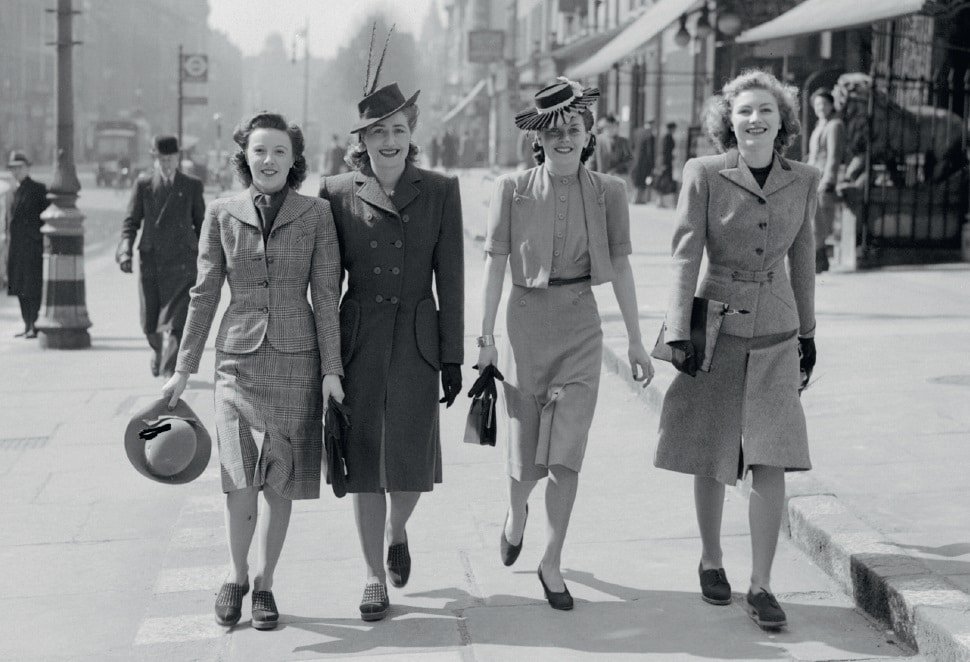
1940s fashion remains one of the most recognizable and influential periods in fashion history. Defined by wartime practicality, elegant silhouettes, tailored clothing, and a gradual return to glamour, the decade created styles that continue to inspire modern designers, vintage enthusiasts, and everyday wardrobes.
The fashion of the 1940s was shaped by major social and economic changes. During the Second World War, clothing became more practical and conservative because fabrics, labor, and manufacturing resources were limited. At the same time, people found creative ways to maintain individuality through accessories, hairstyles, colors, and carefully structured garments.
As the decade progressed, fashion gradually moved from strict wartime utility toward a more feminine and polished aesthetic. This transformation created a unique combination of practical 1940s clothing, military-inspired tailoring, feminine dresses, high-waisted silhouettes, classic accessories, and sophisticated beauty trends.
What Defined 1940s Fashion?
The defining characteristic of 1940s style was the balance between practicality and elegance. Clothing needed to be functional, durable, and economical, but people still wanted to look polished.
Women’s clothing commonly featured strong shoulders, fitted waists, knee-length skirts, high-waisted trousers, structured jackets, and simple yet elegant dresses. Men’s fashion emphasized tailored suits, broad shoulders, high-waisted trousers, and practical outerwear.
The decade’s clothing was generally less decorative than the elaborate styles of previous periods. Instead of excessive fabric and ornamentation, designers relied on cut, proportion, tailoring, and silhouette to create visual interest.
Common characteristics included:
- Shoulder pads and structured shoulders
- Nipped-in or defined waists
- High-waisted trousers and skirts
- Knee-length hemlines
- Tailored jackets and suits
- Simple floral and geometric prints
- Practical utility clothing
- Leather and fabric accessories
- Classic pumps and low-heeled shoes
- Hats, gloves, and handbags
- Red lipstick and carefully styled hair
These details created a distinctive look that can still be recognized immediately as 1940s fashion.
Women’s Fashion in the 1940s
Women’s fashion changed dramatically throughout the decade. At the beginning of the 1940s, women could still wear many of the sophisticated styles associated with the late 1930s. However, wartime conditions quickly influenced clothing design.
The typical 1940s female silhouette emphasized the upper body. Broad shoulders and structured jackets created a powerful appearance, while fitted waists maintained a feminine shape.
Skirts were generally practical in length and often reached around the knee. Full, floor-length skirts were less common for everyday wear because they required more material.
1940s Dresses
1940s dresses were often elegant without being excessively elaborate. Day dresses typically featured modest necklines, fitted bodices, defined waists, and practical skirts.
Popular designs included:
- Shirtwaist dresses
- Wrap-style dresses
- Floral day dresses
- Polka-dot dresses
- Tailored dresses
- Rayon dresses
- Printed cotton dresses
- Evening gowns
- Tea-length dresses
Patterns such as florals, checks, stripes, and polka dots were particularly recognizable.
For formal occasions, women could still wear glamorous evening dresses. These garments often featured longer lengths, elegant fabrics, fitted silhouettes, and carefully designed necklines.
1940s Skirts and Blouses
Separates became increasingly important during the decade. Women could combine a high-waisted skirt with a fitted blouse to create different outfits without owning a large wardrobe.
Pencil-like and straight skirts were popular, while practical A-line and slightly fuller styles also appeared. Blouses often included collars, short sleeves, puff sleeves, or decorative details around the neckline.
A simple blouse tucked into a high-waisted skirt became one of the most recognizable everyday combinations of the period.
1940s Women’s Trousers
One of the most important developments in women’s fashion was the growing acceptance of women’s trousers.
Before the 1940s, trousers were generally associated with specific activities rather than everyday feminine fashion. Wartime employment changed this. Women increasingly worked in factories, offices, transportation, agriculture, and other environments where practical clothing was necessary.
High-waisted, wide-leg trousers became particularly associated with the period. They were comfortable, functional, and easy to combine with fitted shirts, sweaters, or jackets.
The popularity of trousers during the decade helped establish their long-term place in women’s wardrobes.
1940s Suits and Tailoring
Tailoring was central to 1940s fashion. Women’s suits frequently featured strong shoulders, fitted waists, structured jackets, and coordinated skirts.
The influence of military uniforms was clearly visible. Jackets often had a disciplined, structured appearance, while decorative details were kept relatively restrained.
A well-tailored suit could be worn for work, shopping, travel, or social occasions, making it an important part of the practical 1940s wardrobe.
Wartime Fashion and Utility Clothing
World War II had a profound influence on fashion. Governments introduced restrictions on materials and manufacturing, and designers had to work within strict limitations.
In Britain, the Utility clothing system encouraged standardized designs and efficient use of materials. Similar pressures affected clothing production elsewhere.
Fabric conservation meant that garments often became simpler. Decorative elements such as excessive pleating, large cuffs, unnecessary pockets, and elaborate details were reduced.
This did not mean fashion disappeared. Instead, people became more creative with what they had.
Women could change the appearance of an outfit through scarves, brooches, jewelry, belts, hats, hairstyles, and makeup.
The Influence of Military Style
Military clothing strongly influenced civilian fashion during the 1940s.
Elements such as:
- Broad shoulders
- Structured jackets
- Button-front coats
- Utility pockets
- Belts
- Epaulettes
- Darker colors
- Tailored silhouettes
appeared in civilian clothing.
This influence created the strong, confident appearance associated with many 1940s women’s outfits.
1940s Men’s Fashion
Men’s fashion during the decade was equally influenced by wartime conditions. The traditional tailored suit remained important, but fabric restrictions encouraged simpler construction.
A classic men’s outfit could include a high-waisted pair of trousers, a tailored jacket, a collared shirt, a tie, and polished leather shoes.
Suits generally had broad shoulders and relatively high-waisted trousers. The overall appearance was structured and masculine.
During wartime, uniforms naturally became an important part of everyday life. Military aesthetics influenced civilian clothing even when men were not serving.
After the war, men’s fashion gradually became more relaxed, although traditional tailoring remained popular.
1940s Shoes
Shoes were designed around practicality and durability. Women commonly wore closed-toe pumps, low heels, wedges, and practical lace-up shoes.
Wedge shoes became particularly useful because wartime material shortages affected the availability of traditional shoe materials.
Men commonly wore leather lace-up dress shoes, boots, and other sturdy styles suitable for work and formal occasions.
Footwear was often less extravagant than in other fashion eras, but shoes remained an important finishing element.
1940s Hats and Accessories
Accessories played a major role in creating a polished 1940s appearance.
Hats were especially important for women’s fashion. Small tilted hats, turbans, berets, and structured styles could transform a simple outfit.
Scarves were another versatile accessory. They could be worn around the neck, tied over the hair, or incorporated into a hairstyle.
Other popular accessories included:
- Gloves
- Brooches
- Handbags
- Belts
- Costume jewelry
- Hair accessories
- Stockings
- Scarves
Accessories were particularly valuable during wartime because they allowed people to refresh familiar clothing without buying completely new outfits.
1940s Hairstyles
Hair was an essential part of the 1940s look. Women generally maintained carefully styled hair, even when clothing had become more practical.
Popular hairstyles included victory rolls, waves, curls, rolls, and pinned-up styles.
Victory rolls became strongly associated with wartime fashion. They provided a glamorous appearance while remaining practical enough for working women.
Men generally wore short, neatly combed hairstyles. Traditional grooming emphasized a clean and disciplined appearance.
1940s Makeup
Makeup during the decade was glamorous but relatively focused.
The signature look included defined eyebrows, clear skin, subtle eye makeup, and bold red lipstick.
Red lipstick became one of the most recognizable beauty symbols of the era. Different shades of red were used to create a polished appearance.
Beauty routines emphasized looking neat and confident rather than appearing overly dramatic.
Popular 1940s Colors and Fabrics
Color choices varied depending on location, social class, occasion, and availability. Practical clothing often appeared in navy, brown, gray, beige, olive, cream, and muted tones.
Brighter colors and prints were also used, particularly for women’s dresses and accessories.
Fabrics commonly included:
- Cotton
- Wool
- Rayon
- Silk
- Linen
- Synthetic materials
- Practical blended fabrics
Because of wartime restrictions, material availability strongly affected what people could purchase and wear.
1940s Fashion After World War II
The end of World War II marked a major transition in fashion.
As restrictions eased, designers could once again experiment with fabric, volume, decoration, and more luxurious construction. The restrained wartime silhouette gradually gave way to a more romantic and feminine aesthetic.
By the late 1940s, fashion was preparing for the dramatic changes that would define the 1950s.
This transition demonstrated how quickly clothing could respond to changes in society. The decade began with an elegant continuation of pre-war fashion, moved into practical wartime clothing, and ended with renewed optimism and glamour.
How to Create a 1940s-Inspired Outfit Today
Creating a 1940s-inspired outfit does not require wearing an entirely vintage wardrobe. A few carefully selected elements can capture the character of the decade.
For a women’s look, we can combine:
- A high-waisted skirt or wide-leg trousers
- A fitted blouse
- A structured jacket
- Low heels or vintage-inspired pumps
- A small handbag
- A scarf or brooch
- Red lipstick
- Victory rolls or soft waves
For a men’s outfit, a strong combination would include:
- High-waisted trousers
- A tucked-in collared shirt
- A tailored jacket
- A classic tie
- Leather dress shoes
- A structured overcoat
The key is silhouette and proportion. Modern clothing can still look convincingly 1940s-inspired when the waist, shoulders, trousers, skirts, and accessories reflect the era.
Why 1940s Fashion Is Still Popular
The continued popularity of 1940s fashion comes from its distinctive combination of elegance, practicality, confidence, and historical character.
Unlike trends that depend heavily on logos or seasonal designs, 1940s clothing often relies on timeless elements such as tailoring, defined silhouettes, classic dresses, polished accessories, and carefully styled hair.
Vintage collectors appreciate original garments, while modern fashion designers frequently reinterpret 1940s details in contemporary collections.
The decade also represents an important period in the development of women’s fashion. The widespread adoption of practical trousers and workwear helped demonstrate that women’s clothing could be both functional and stylish.
1940s Fashion vs. 1950s Fashion
Although the two decades are sometimes confused, their silhouettes are noticeably different.
1940s fashion generally emphasized:
- Strong shoulders
- Structured tailoring
- Practical skirts
- High-waisted trousers
- Utility-inspired clothing
- Modest decoration
By contrast, 1950s fashion became famous for fuller skirts, emphasized bust-and-waist proportions, more elaborate dresses, and a highly feminine hourglass silhouette.
Understanding this difference helps when building an authentic vintage-inspired wardrobe.
Frequently Asked Questions About 1940s Fashion
What did women wear in the 1940s?
Women commonly wore knee-length dresses, high-waisted skirts, blouses, tailored suits, wide-leg trousers, jackets, practical shoes, and accessories such as hats and gloves. Clothing varied according to occupation, location, social setting, and wartime material availability.
What was the most popular 1940s fashion style?
There was no single style, but the structured silhouette with broad shoulders and a defined waist was particularly characteristic. Dresses, tailored suits, skirts, and high-waisted trousers were all important parts of the decade’s wardrobe.
What did men wear in the 1940s?
Men commonly wore tailored suits, high-waisted trousers, collared shirts, ties, leather shoes, and structured coats. Military uniforms were also highly visible during the war and influenced civilian fashion.
Why was 1940s clothing so practical?
World War II created shortages of fabric and other resources while millions of people entered military and industrial work. As a result, clothing became more economical, durable, and functional.
Were trousers popular for women in the 1940s?
Yes. Women’s trousers became increasingly common, particularly for factory work, physical labor, and other practical activities. High-waisted and wide-leg trousers became an important part of the decade’s style.
What makeup was popular in the 1940s?
A classic 1940s makeup look generally featured defined brows, a polished complexion, subtle eye makeup, and red lipstick. The overall effect was feminine, neat, and confident.
Final Thoughts on 1940s Fashion
1940s fashion represents far more than a vintage clothing trend. It reflects a decade in which fashion adapted to war, economic restrictions, changing workplaces, and evolving social expectations.
The era’s strongest characteristics—structured shoulders, defined waists, tailored suits, practical trousers, elegant dresses, classic accessories, vintage hairstyles, and bold lipstick—created a visual language that remains instantly recognizable.
From wartime utility clothing to post-war elegance, the 1940s demonstrated that style could survive even under difficult circumstances. Its influence continues today because the decade combined functionality with sophistication in a way that remains remarkably wearable.
Whether we are researching historical clothing, creating a vintage wardrobe, planning a themed event, or simply appreciating classic style, 1940s fashion offers an enduring source of inspiration. Its carefully tailored silhouettes, practical designs, and unmistakable elegance continue to make the decade one of the most fascinating periods in modern fashion history.